
Why Others Function Normally While You Need An "Escape": The Biological Truth About Paralyzing Anxiety
Understanding the limits of your biological hardware, the illusion of equality, and the hidden cost of numbing the system.
Every single day, millions of exhausted individuals secretly open their browsers and type in desperate queries: "magic cure for anxiety," "quick fix for depression," or "how to overcome fear instantly." They are looking for a lifeline. If you have ever searched for these terms, you know the exact flavor of this quiet desperation.
You sit and watch the people around you—your colleagues, your friends, even strangers on the internet—navigating the complexities of daily life with an apparent, effortless grace. They answer emails, make long-term plans, engage in social gatherings, and handle friction without shutting down. Meanwhile, you find yourself facing a simple daily task and feeling a paralyzing wall of resistance. To cope, you seek an escape. You rely on hours of mindless doomscrolling, unprescribed sedatives, alcohol, or simply sleeping the day away just to hit the "mute" button on the deafening noise in your head.
This stark contrast breeds a toxic conclusion: you begin to believe you are fundamentally broken. You assume you lack willpower, or that you are inherently flawed. The objective, biological truth is vastly different. You are not broken. You are simply operating under a false set of rules, struggling with a mechanical system overload.
1. The Illusion of the Starting Line: You Are Not The Same
The modern self-help industry thrives on a comforting lie: the idea that everyone is created equal and starts from the exact same baseline. This is scientifically, biologically, and psychologically false. The very first step toward cognitive liberation is radical acceptance of your unique architecture.
You are not the same as the person next to you. Your genetic predispositions, the environment you were raised in, the specific traumas you endured, and your neurological wiring belong to you alone. You might genuinely be less naturally sociable than others. You might process stress at a much higher intensity. Comparing your internal struggle to someone else's external highlight reel is not just illogical; it is a massive waste of cognitive processing power.
The Processing Loop of the Past
Dwelling on your past—wishing you had different parents, a different upbringing, or made different choices—forces your brain into an endless "background processing loop." Imagine a computer running a heavy diagnostic scan on a corrupted file that cannot be deleted. It drains all available battery, leaving zero energy for current tasks. You cannot change your origins, but you must forcefully close the application of the past to free up memory for the present.
2. Legacy Hardware Operating on a High-Frequency Grid
To truly comprehend why you feel paralyzed, you must examine the hardware inside your skull. The human brain was fundamentally engineered thousands of years ago. It is a masterpiece of survival machinery, but it is severely limited in its capacity. Conceptually, think of your conscious processing power as a highly specialized legacy processor with a strictly capped bandwidth. It was perfectly calibrated to handle the concrete necessities of ancient life: finding immediate sustenance, recognizing physical threats, and maintaining small tribal connections.
The problem is not the hardware; it is the environment. Today, you are forcing that exact same finite biological infrastructure to process a limitless flood of abstract data daily. It must calculate future economic inflation, analyze thousands of digital opinions, anticipate complex career trajectories, and process global crises in real-time.
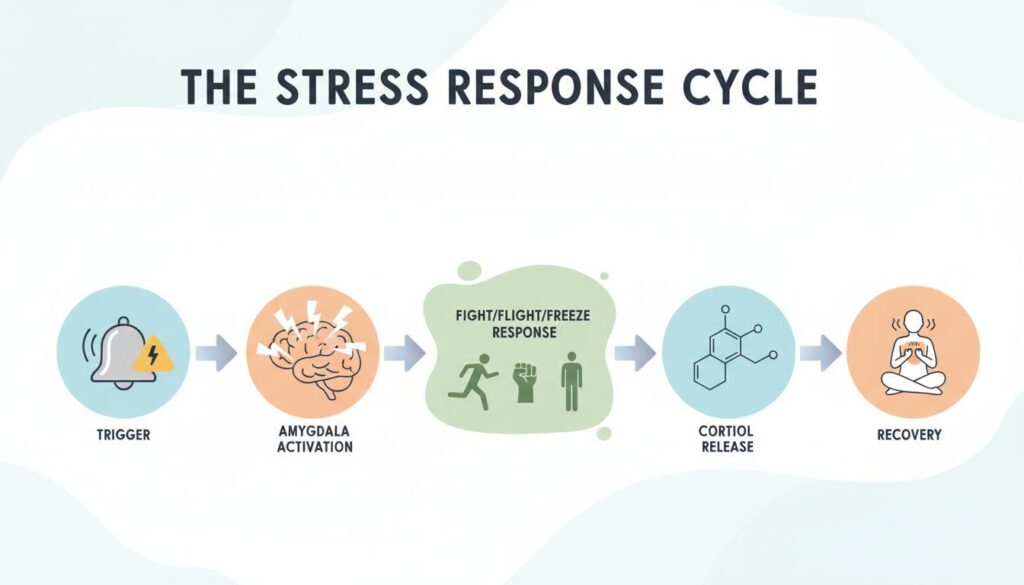
When a system is given more data than its bandwidth allows, it does not magically expand its capacity. It freezes. It crashes. When your brain is subjected to this modern overload, your paralysis is not laziness. It is an evolutionary "freeze response." Your system shuts down the prefrontal cortex (the logical, planning part of the brain) to conserve energy and prevent a total systemic failure.
The Biological Mismatch
Primal Sensory Bandwidth
(Designed for basic survival)
Modern Abstract Overload
(Endless conceptual data)
3. The Trap of Escapism: The True Cost of "Peace"
Because this baseline biological architecture cannot handle the crushing cognitive pressure, the biological urge to escape becomes overwhelming. This is exactly where the trap closes. When the internal alarms of anxiety and inadequacy sound, most people reach for the fastest chemical or digital silencer available. The goal is to numb the system.
Let’s be brutally honest: the numbing works. When you take the unprescribed sedative or lose yourself in hours of isolated distraction, the noise stops. You feel a wave of artificial peace. But you must ask yourself: What are you actually trading for this comfort?
By constantly sedating your system, you are paying for peace with your life’s potential. You are trading your cognitive sharpness for a chemical blanket. The tasks that your peers accomplish effortlessly become monumental mountains to you, not because you are incapable, but because you have artificially lowered your baseline energy to near zero. You are existing in a state of suspended animation—a ghost watching your own life pass by from the safety of the sidelines. You are not curing the overload; you are just turning off the warning lights while the engine destroys itself.
4. Systemic Recalibration: The Necessity of the Internal War
If you are waiting for a comfortable, easy way out, you will wait forever. Society's default advice to someone who is overwhelmed is to "take a deep breath," "meditate," or "relax." But relaxation is a fatal prescription for someone whose primary problem is already escaping into paralyzing comfort.
The only scientifically grounded way to rebuild your cognitive capacity is to declare an internal war against your own instinctual reflexes. You must understand that restoring your biological baseline is going to be deeply uncomfortable, and your nervous system will fight you every step of the way.
The Rule of Opposite Action
When your brain detects stress and orders you to retreat to the couch, to grab the substance, or to avoid the difficult conversation, you must force your physical body to execute a mechanical override. It is not about waiting for motivation. Motivation is a deceptive emotion that rarely arrives when needed. It is about strict, behavioral compliance.
When you act in direct defiance of your brain’s demand for comfort, you create immense internal friction. This friction is not a sign that you are failing; it is the exact biological mechanism required to short-circuit the old pattern and forge new neural pathways (neuroplasticity). Every time you choose the uncomfortable action over the easy escape, you are restructuring your neural architecture. You are teaching the system that the alarm is false, and that you are the administrator controlling the hardware, not the software running on default.
The framework is simple, but brutal:
- Acknowledge the biological mismatch: You are operating legacy hardware in a chaotic world. The anxiety is a data error, not a character flaw.
- Accept your reality: Stop comparing your unique neurological baseline to others. Start exactly where you are, with all your perceived flaws.
- Embrace the friction: Stop looking for a magic cure. The cure is the willingness to be uncomfortable. Victory is found in the deliberate, exhausting battle against your own instinct to hide.
Scientific Foundations
- Evolutionary Mismatch: The framework explaining why ancient biological hardware triggers freeze responses when overwhelmed by modern environments.
- Neuroplasticity vs. Avoidance: Neurological research demonstrates that acting against the avoidance instinct (voluntary friction) is required to weaken the amygdala's fear response and strengthen the prefrontal cortex's executive control.
- The Cost of Sedation: Studies on the long-term cognitive effects of unprescribed CNS (Central Nervous System) depressants and chronic digital escapism, linking them to severe reductions in baseline executive functioning and social engagement.
*Medical Disclaimer: The content provided on Mind Origins is for educational and self-discovery purposes only. It is not intended as a substitute for professional clinical advice, diagnosis, or psychiatric treatment. Always consult a qualified healthcare provider regarding medical conditions.*
Next Steps for Systemic Recalibration
To fully master your cognitive baseline, you must address the specific ways your legacy hardware misfires in different environments. We recommend analyzing these deep dives next:
- How to Stop Overthinking at Night: The Biological Architecture for an Exhausted Brain
- The Biological Reason You Keep Losing Focus: Reclaiming Your Cognitive Baseline
Scientific Foundations & Academic Sources
- Evolutionary Mismatch Theory: Research in the Journal of Evolutionary Psychology details how "Legacy Hardware" triggers chronic anxiety when forced to process abstract, modern stressors that the primal system cannot categorize.
- Avoidance and Neural Reinforcement: Studies published via the National Center for Biotechnology Information (NCBI) demonstrate that escapism/avoidance strengthens the amygdala’s dominance, whereas "Mechanical Override" is required to restore Prefrontal Cortex oversight.
- The Impact of Digital Sedation: Clinical analysis shows that chronic digital escapism serves as a "Topical Anesthetic" for the brain, preventing the necessary friction required for neuroplasticity and long-term anxiety regulation.
Master Your Default Settings
Explore the tools designed for your neural reset: